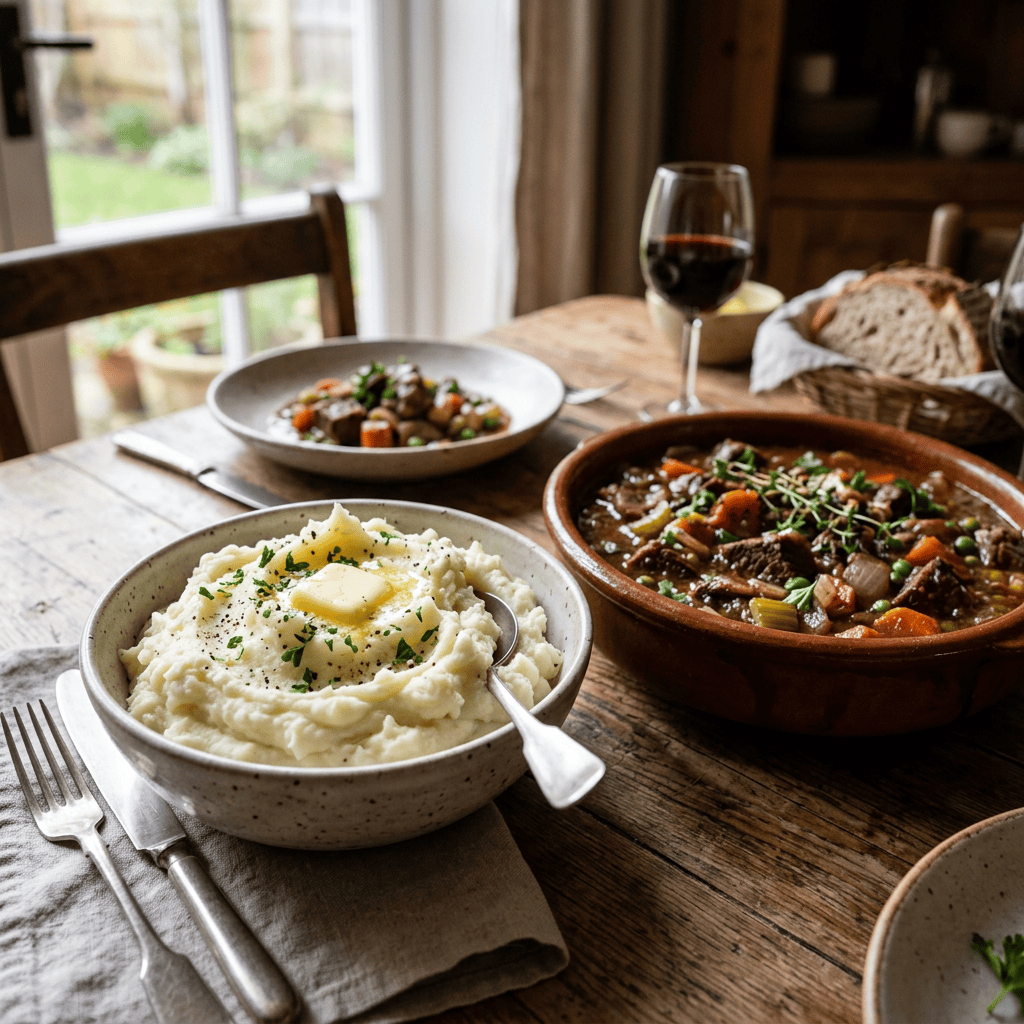
If someone tells me they don’t like mashed potatoes, I find it so difficult to process. I just tell myself they’ve obviously never eaten good mash. I LOVE mashed potato. I love mopping up casserole sauces and gravy with it. I love it piled up with sausages and onion gravy. I love it as a topping for a cottage pie or fish pie. I love it as a leftover, sautéed and topped with a fried egg or folded into fish cakes. Seriously, what would life be like without mash?
So, here are all my top tricks and tips for making lots and lots of lovely mash!
Which variety of potatoes are best for mash?
Like all good recipes, starting with the right ingredients is critical to the end result. Perfect mash needs a fluffy, starchy potato like Maris Piper or King Edward. These high-starch potatoes break down easily for a light, airy mash. Waxy potatoes like new potatoes, Charlotte or salad potatoes simply won’t work.
How many potatoes do I need?
It all depends on how many people you’re feeding and how big their appetites are. 1kg is usually enough for 6. 200g is usually enough for 2. It freezes really well and leftover mash can be fried or added to fish cakes so there shouldn’t really be any waste.
Which is the best way to cook the potatoes for mash?
If you have the time, or you are a restaurant Chef, baking the potatoes in the oven and then scooping out the flesh for mash will absolutely give you the best flavour. If you don’t have time for that, you can steam or boil them. Once you peel your potatoes, you need to cut them into roughly equal-sized pieces before you cook them otherwise they will cook unevenly and you’ll get lumps of undercooked potato in your mash. Nobody wants that! Bags of potatoes usually contain lots of different sizes so you may need to cut them into 4 or 8 pieces to get roughly equal chunks.
Cover the potatoes in cold water so that they are barely covered in a large saucepan. Bring to the boil and then add a teaspoon of salt. Turn the heat right down, simmer on a low heat for roughly 10 minutes. Use the point of a sharp knife in the middle of a couple of the pieces to test if they are cooked. Drain thoroughly and allow the steam to dissipate completely before attempting to mash them or they will taste watery.
How do I make mash smooth and creamy?
Once the potatoes are cooked, the mashing can commence. Passing the potatoes through a potato ricer (like a large garlic press) makes the smoothest classic mash. Chefs make puree de pommes by passing the mash through a fine sieve. Don’t be tempted to use a food processor as it will turn the potato into glue. I use a standard hand masher, carefully making sure there are no lumps left, and then I whisk in my creaming agents (butter and milk) using a decent fork with big, sturdy tines or an electric hand whisk.
If I’m serving the mash as a side dish, I like it very smooth and creamy. If I’m going top a fish or cottage pie with the mash, I leave it slightly more stiff or it will just sink and dissolve into your filling.
How do I make classic mash?
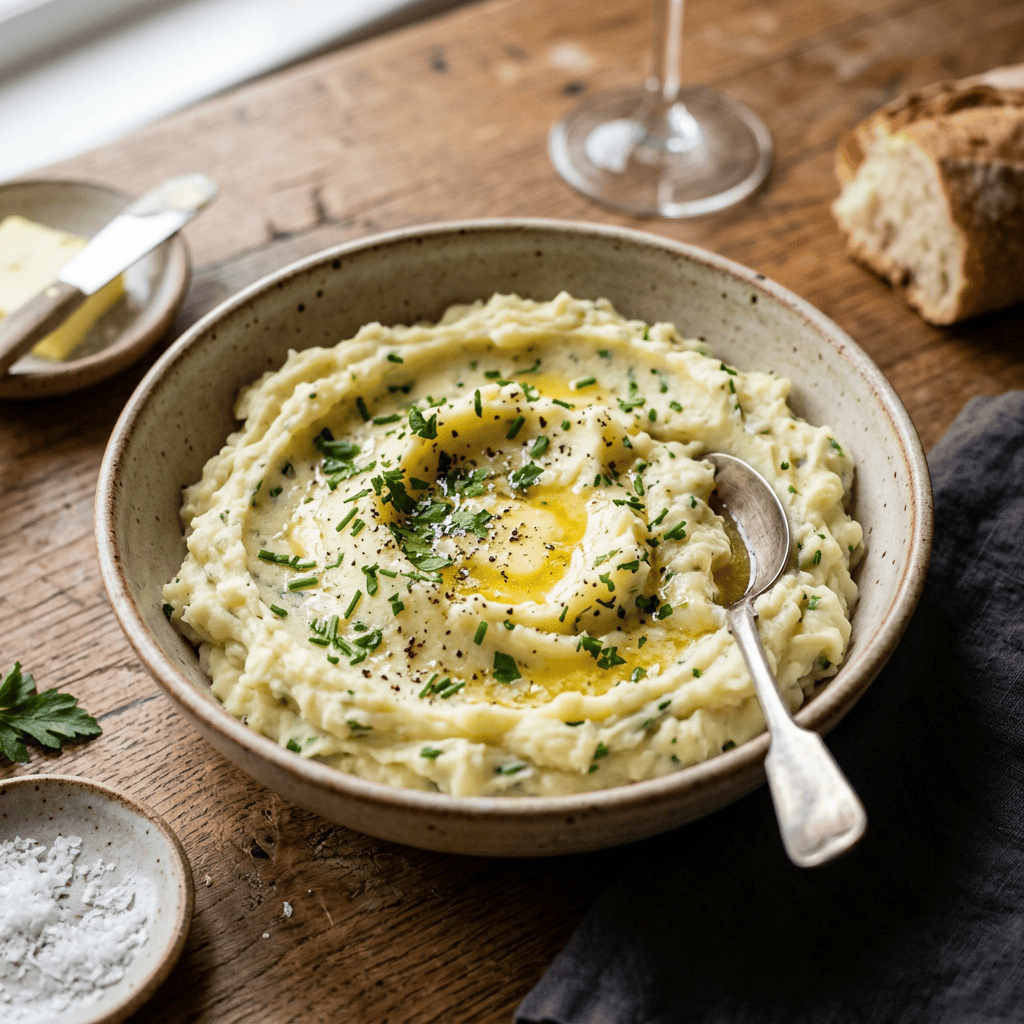
To make classic mash, you just need to add creaming agents i.e. butter, whole milk and cream. Always warm your milk and cream before whisking it into the mash so that the fat in the milk emulsifies, and it also keeps your mash warm. Chefs will add up to half the weight of the mash in butter to make it delicious. Most of us can’t take that level of carb and fat load every day so just add as many cubed pieces of butter as you like. I prefer to use salted butter. Add the butter first and then whisk in the warm milk. Stop when it’s the right consistency. Season with a dash of ground white pepper and/or a scant grating of nutmeg.
Pimp it up
There are plenty of delicious variations on classic mash. These are my favourites.
- Fried onion mash. Fry a whole, thinly sliced onion in olive oil until dark and caramelised. Stir it through the mash once you’ve creamed in the milk and butter.
- Colcannon; chopped cabbage and butter. Lightly steam thinly shredded ribbons of cabbage like Savoy or January King. Stir it through the creamed mash and top with cubes of butter before serving.
- Champ. Gently poach a small shredded leek, 2 chopped spring onions and bay leaf in 150ml of whole milk, a pinch of salt and white pepper and 50g of butter for about 8 minutes. Remove the bay leaf and whisk the warm milk and butter mixture into the mash until it reaches the desired consistency. Stir through a little finely chopped parsley before serving.
- Cream cheese or sour cream and chive mash. Instead of creaming with milk and butter, just fold in a carton of sour cream or cream cheese and then plenty of chopped fresh chives.
- Cheesy mash. Fold in 2 tbsps of grated Parmesan and 2 tbsps grated Cheddar to classic mash.
- Horseradish mash. Fold in 2 or 3 teaspoons of good creamed horseradish into your classic mash. Fabulous with roast beef.
- Creamed celeriac mash. Steam the celeriac separately. Whisk into a puree with a hand blender until smooth. Fold the puree into your mash before adding cream and butter to control the consistency. Too much liquid will make it go runny.
- Saffron mash. Steep a few saffron strands in some warm milk. Whisk into the mash. It will turn the mash golden and the lovely earthy flavour is great with fish dishes.
- Spicy mash. Temper a teaspoon each of mustard, nigella and cumin seeds in your melted butter. Fold the butter and a teaspoon of turmeric into the mash and then a little wilted spinach and chopped fresh coriander. Use it as topping for a shepherd’s pie made with curried lamb mince.
- Olive oil mash. Whisk in extra-virgin olive oil to the mash instead of butter and cream. Great with fish dishes.
- Loaded mash. Before putting it out in your serving dish, top it with crisp bacon lardons and finely chopped spring onion.
Share, follow, like, enjoy!
- To get the latest #TheFridayRecipe from the Pigeon Cottage Kitchen blog, just add your email address to the subscribe box.
- Follow me on Instagram at Pigeon Cottage Kitchen, and the Pigeon Cottage Kitchen page on Facebook.
- Click on the link to get your very own copy of my family recipe book, Whats4teaMum?
- Book your one to one cookery coaching session here!

Leave a comment