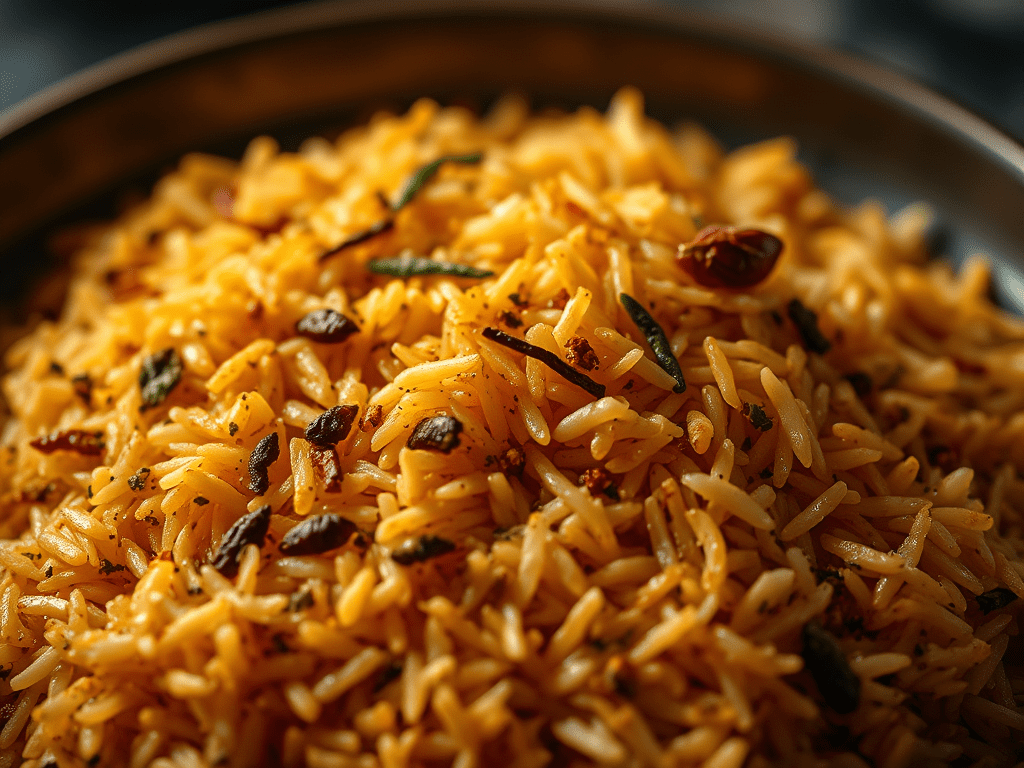
I love to serve fluffy mounds of basmati rice with curries or as part of a cold buffet. So, what’s the secret to making that perfect, fluffy dry mound of rice every time? Even experienced cooks can find this a little daunting and end up with a claggy, sticky mess. Well, the mother of a student housemate of mine from India taught me how to do it many, many years ago and I still use her method to this day. Over the years, I’ve become a little more practised and sophisticated with the recipe and flavouring variations I use and so can you. This may sound like a lot of steps for something as simple as a bowl of rice but once you’re practised it a few times, it will just become second nature and you’ll get perfect rice every time.

Buying basmati rice
Like most things in life, you get what you pay for. The longer the basmati grain, the better it is. Another important sign is a slightly tapered end of the grain. Basmati grains should never be flat along the sides. The best basmati rice isn’t pearly white—the grains will have a slightly golden hue, but shouldn’t be grey looking. Truly authentic basmati can come only from the sub-continent of India and is usually aged for a minimum of 12 months in controlled silos. This allows it to develop a non-sticky texture that is always loose and separate with a fragrant, nutty aroma.The best readily available supermarket brand is probably Tilda and I also buy Waitrose own brand basmati. If you have an Asian grocery shop nearby, buy the best brand they have.
Preparing and cooking basmati rice
- When you’re working out how much dry weight to cook, just remember that dry weight volume virtually doubles when cooked. I have a favourite tea mug I use which I half fill if there’s two of us and fill to the top for four and so on. Once I’ve decided how much I’m cooking, I put it in a pyrex bowl and cover it with cold water. I rinse it a couple of times, cover it with cold water again and then leave it to steep for about an hour. This will ensure that the rice cooks more quickly and evenly. The grains will turn from translucent to solid white. After an hour, drain off all the water with a fine sieve, set it over the bowl and leave it to drain a little more.
- I use the absorption method to cook rice which means you need to use a, preferably non-stick, wide bottomed pan with a tight lid. Add a few drops of rapeseed oil to the base of the pan and heat over medium heat. Add the dry soaked rice grains and coat them thoroughly with the hot oil.
- I love plain rice as a foil to a complex curry sauce but to flavour it, add a pinch of salt or any aromatics you fancy like a teaspoon of cumin seeds, a couple of bay leaves, curry leaves, a whole black or a trio of green cardamon pods. If you want yellow rice, add a half a teaspoon of dried turmeric or dribble over some saffron strands dissolved in hot water. If you want it spicy, add a half a teaspoon of chilli flakes. Instead of water, you can cook it in hot chicken stock, a little coconut milk or add a small knob of butter.
- Add the water so that it comes no more than a centimetre above the level of the rice. Bring it to the boil, put the lid on tightly (cover the pan with baking parchment and then add the lid if it’s not tight enough), turn off the heat and just leave it to talk to itself for 10 to 15 minutes. Do not, whatever you do, remove the lid and let the steam out. If you’ve done all the prep properly, the rice will now be perfectly cooked. I have a wooden fork which I use to lightly fluff up the grains without breaking them but you can use a metal one; just be gentle.
- If you keep the lid on, it will keep warm whilst you finish everything else you’re serving the rice with. Always serve it in a warmed bowl.
- At the end, you can garnish it and add more flavour by stirring in cooked peas, cooked green lentils, fried onions, cashew nuts or sultanas. Or, for a fresh flavour, finish it with finely chopped fresh coriander and thinly sliced green or red chilli.
Share, follow, like, enjoy!
- To get the latest #TheFridayRecipe from the Pigeon Cottage Kitchen blog, just add your email address to the subscribe box at the top right-hand column of the website.
- Follow me on Twitter @pigeoncottage, on Instagram at Pigeon Cottage Kitchen, and the Pigeon Cottage Kitchen page on Facebook.
- Click on the link to get your very own copy of my family recipe book, Whats4teaMum?
- Book your one to one cookery coaching session here!


Leave a comment